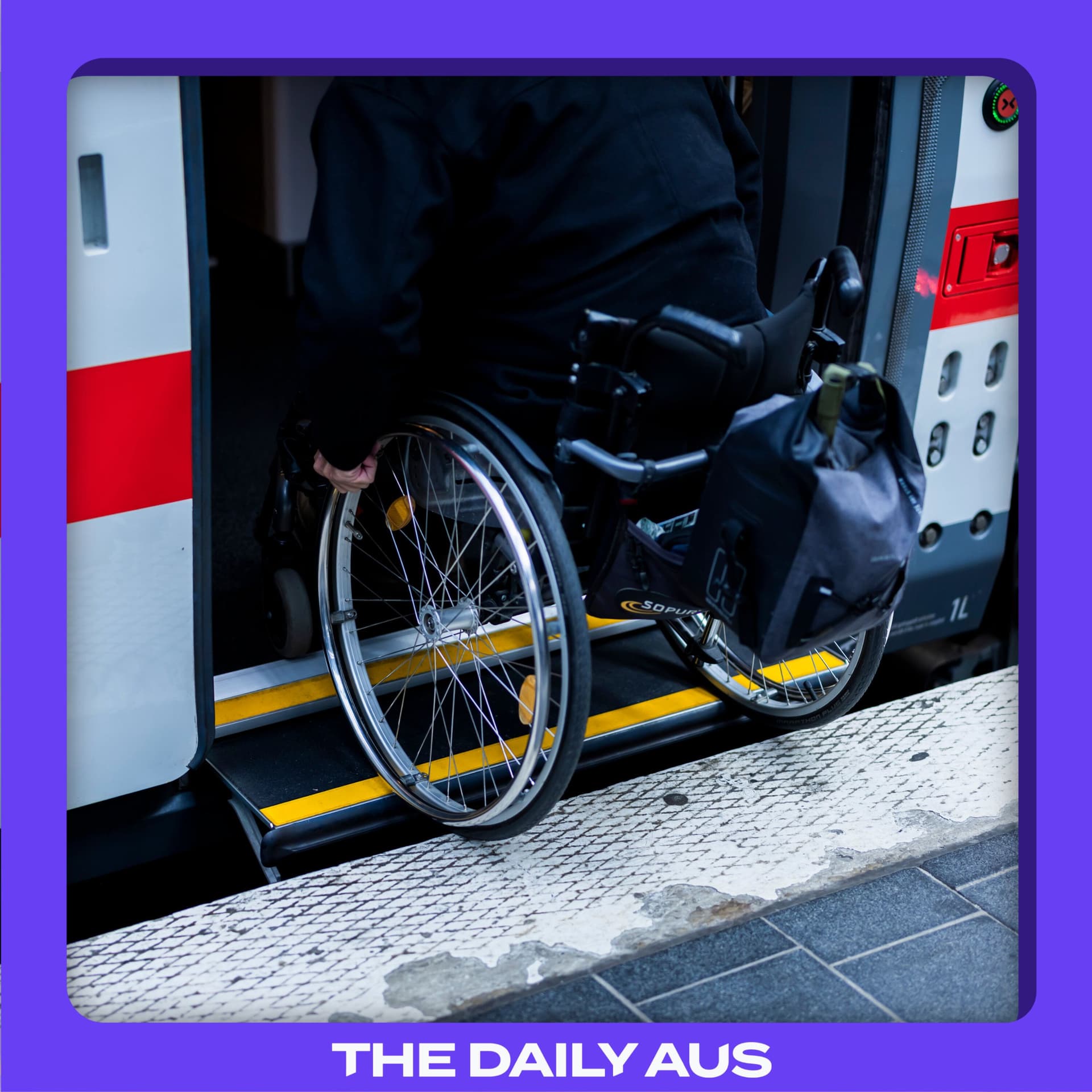
The transport gap for people with disability
Hosts: Zara Seidler • Billi FitzSimons
Producer: Orla Maher
For a lot of us, getting around is something we barely think about. You tap on, jump on the closest bus, train or tram, and you're at work, at your parents' for dinner, or grabbing a coffee with the girls. Our calendars might be packed and our days might feel shorter than ever, but the actual getting there? That's rarely the part that stresses us out.
That's not the reality for everyone, though. Around 5.5 million Australians live with disability, and for many of them the trip itself is the hard part. The step onto the bus might be too high, the station might not have a lift, or the walk to the nearest stop might not be possible at all. So before they can even think about the medical appointment, the shift, or the catch-up at the café everyone’s posting about, they have to work out how to get there on a transport system that wasn’t built with them in mind.
For more than 40 years, state and territory governments have tried to close some of that gap by helping people with disability pay for taxis. In today's podcast, we'll explore how those schemes actually work, whether they're keeping up, and what advocates are pushing for next.
This episode is sponsored by Uber, but they have had no editorial influence over the content we are sharing in today’s podcast.
Hosts: Zara Seidler and Billi FitzSimons
Producer: Orla Maher
Audio editor: Imogen Abbott
Want to support The Daily Aus? That's so kind! The best way to do that is to click ‘follow’ on Spotify or Apple and to leave us a five-star review. We would be so grateful.
The Daily Aus is a media company focused on delivering accessible and digestible news to young people. We are completely independent.
Want more from TDA?
Subscribe to The Daily Aus newsletter
Subscribe to The Daily Aus’ YouTube Channel
Have feedback for us?
We’re always looking for new ways to improve what we do. If you’ve got feedback, we’re all ears. Tell us here.
See omnystudio.com/listener for privacy information.